


If you’ve noticed hazier skies or a scratchy throat around Boise lately, you’re not imagining it. Wildfire season means air quality here can shift quickly — and understanding what that shift actually means for your body is the first step in protecting yourself.
What AQI measures
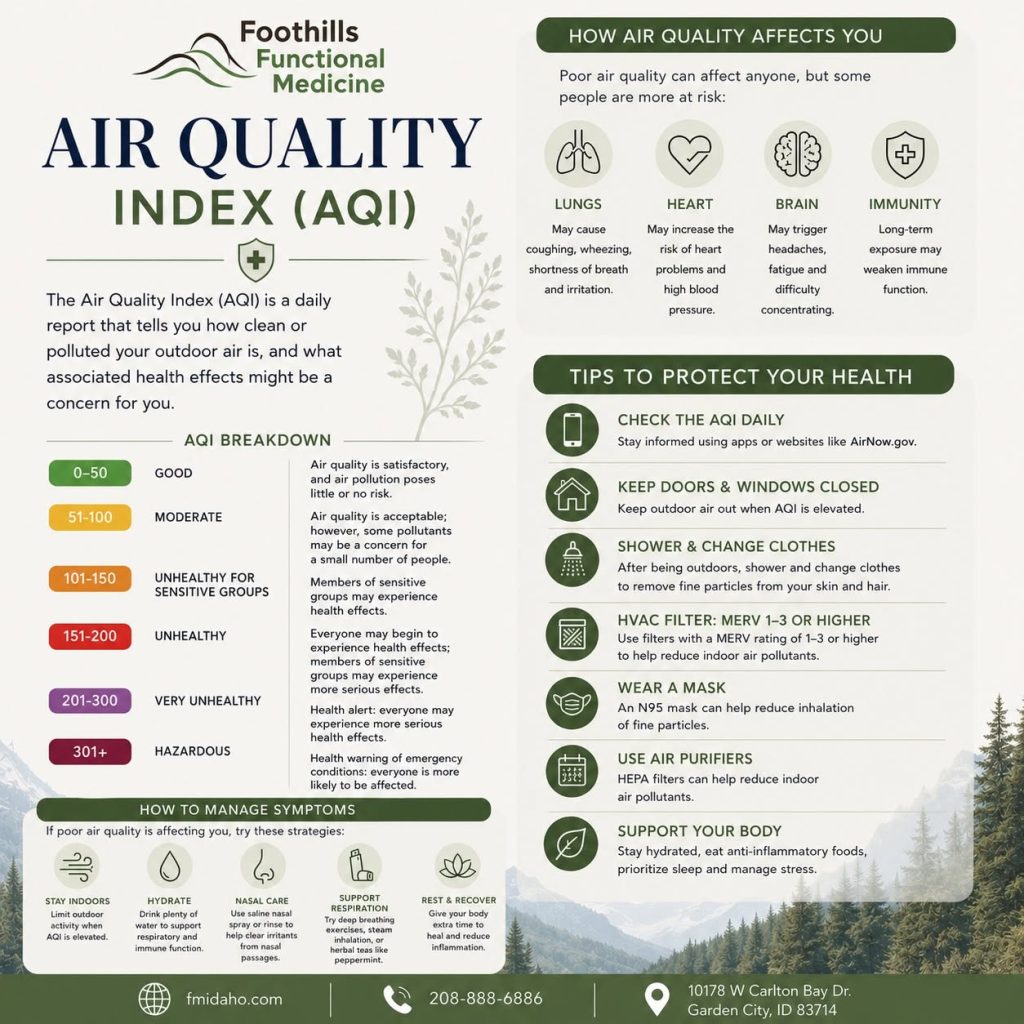
The Air Quality Index is a daily report on how clean or polluted outdoor air is, scored from 0 (good) to 300+ (hazardous). Idaho air can move through several of these categories within the same week during wildfire season.
Why it matters beyond your lungs
Poor air quality doesn’t just affect people with asthma. It can impact your heart (increased risk of complications and elevated blood pressure), your brain (headaches, fatigue, difficulty concentrating), and your immune system over time with repeated exposure.
What actually helps
A handful of habits go a long way on higher-AQI days:
- Check the AQI each morning (AirNow.gov)
- Keep windows and doors closed when it’s elevated
- Shower and change clothes after time outdoors
- Use a MERV 1-3+ HVAC filter or a HEPA air purifier indoors
- Stay hydrated and prioritize anti-inflammatory foods and sleep
The bigger picture
At Foothills, this is the kind of thing we look at as part of the full picture — not just treating a symptom, but understanding what’s actually contributing to it. If air quality is a recurring factor in how you feel, that’s worth exploring at the root, not just managing day to day.
Promoting a healthier life, one patient at a time.