


Rather than stopping at basic labs, we often use advanced specialty testing to better understand what may be happening beneath the surface. These tests can help uncover hidden contributors to symptoms and guide more personalized treatment plans.
Here are four specialty tests we frequently use in our practice.
1. GI-MAP + Zonulin: A Deeper Look at Gut Health
The gut affects far more than digestion.
The gastrointestinal system plays a major role in:
- Immune function
- Inflammation
- Nutrient absorption
- Neurotransmitter production
- Hormone metabolism
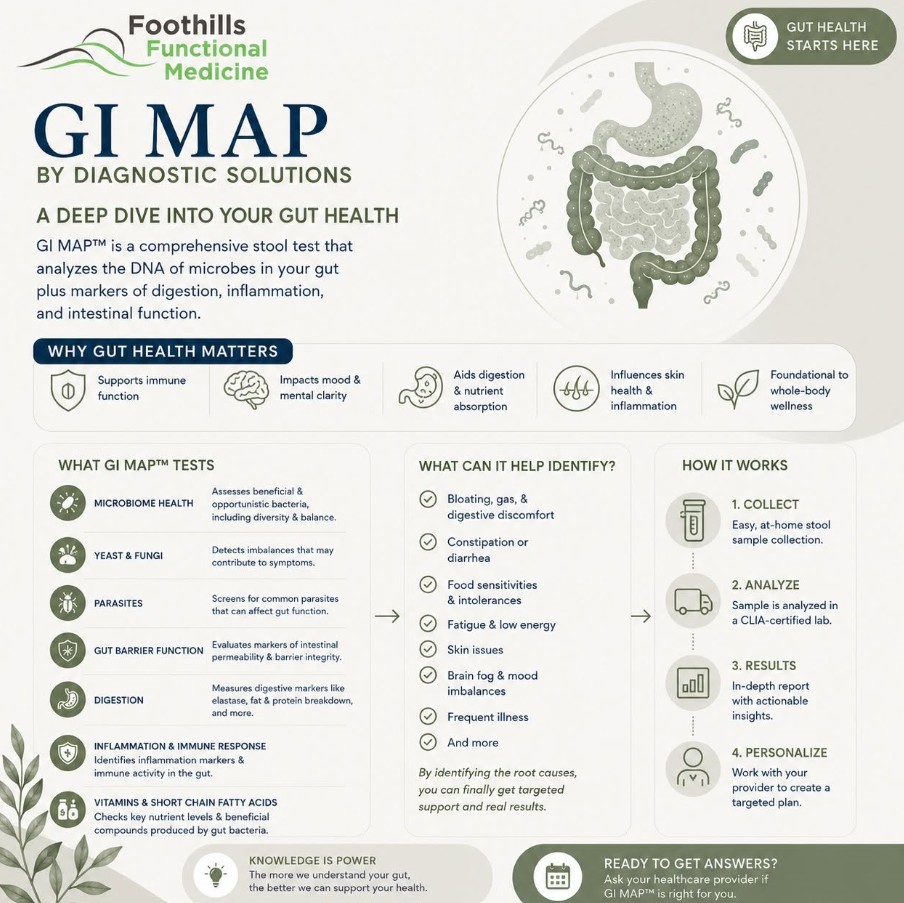
The GI-MAP is a comprehensive stool test that uses quantitative PCR technology to evaluate the gut microbiome.
It can help identify:
- Bacterial imbalances (dysbiosis)
- Opportunistic pathogens
- Parasites
- Yeast/fungal overgrowth
- Digestive insufficiency
- Inflammatory markers
- Immune activity
We often pair this with zonulin, a marker associated with intestinal permeability (“leaky gut”).
Elevated zonulin may suggest that the tight junctions in the intestinal lining are more permeable than they should be, allowing particles such as bacterial fragments, toxins, or incompletely digested food proteins to cross into circulation and stimulate immune activation.
Why this matters:
Poor gut health has been associated with conditions such as Irritable Bowel Syndrome, Inflammatory Bowel Disease, and several autoimmune conditions.
Common symptoms that may warrant testing:
- Bloating
- Constipation or diarrhea
- Acid reflux
- Food reactions
- Skin issues
- Brain fog
- Autoimmune symptoms
2. KBMO FIT 176: Food Sensitivity Testing
Have you ever felt worse after eating—but can’t identify why?
Not all food reactions are immediate.
Unlike classic food allergies (which are often rapid and IgE-mediated), delayed food sensitivities can cause symptoms hours or even days later, making them difficult to recognize.
The KBMO FIT 176 evaluates immune-mediated inflammatory responses to 176 foods and additives using mediator release testing.
This test may help identify foods contributing to:
- Chronic inflammation
- Digestive symptoms
- Migraines
- Joint pain
- Fatigue
- Brain fog
- Skin flares
The goal is not lifelong food restriction.
Instead, testing can help us identify possible triggers, temporarily remove inflammatory foods, support gut healing, and strategically reintroduce foods when appropriate.
Food should nourish—not leave you feeling inflamed and exhausted.
3. Heavy Metal & Elements Testing
Toxin exposure is more common than many people realize.
Over time, exposure to heavy metals can contribute to oxidative stress, mitochondrial dysfunction, and impaired detoxification.
Common metals tested include:
- Mercury
- Lead
- Arsenic
- Cadmium
- Aluminum
Exposure can come from:
- Seafood
- Occupational exposure
- Old pipes
- Air pollution
- Household products
- Cosmetics
- Dental amalgams
We use heavy metal and elemental testing to evaluate toxic burden and essential mineral status.
This testing may be helpful for patients with:
- Chronic fatigue
- Brain fog
- Neurologic symptoms
- Hormone imbalance
- Detoxification issues
- Unexplained inflammation
- Mineral analysis may also identify imbalances in:
- Magnesium
- Zinc
- Selenium
- Copper
- Calcium
- Because minerals help regulate detoxification, mitochondria, thyroid function, and immune balance, deficiencies can have widespread effects.
4. Mold Exposure Testing
Mold illness is often overlooked.
For sensitive individuals, exposure to water-damaged buildings and mold toxins (mycotoxins) may trigger significant inflammatory responses.
Mold exposure has been associated with symptoms such as:
- Brain fog
- Chronic fatigue
- Sinus congestion
- Headaches
- Dizziness
- Chronic cough
- Skin irritation
- Worsening autoimmune symptoms
Mycotoxins can affect:
- Immune regulation
- Mitochondrial function
- Detoxification pathways
- Neurologic health
Some people are especially vulnerable due to genetic differences affecting toxin clearance.
In functional medicine, mold testing may involve:
- Urine mycotoxin testing
- Environmental/home testing
- Inflammatory markers
- Symptom assessment
For some patients, identifying mold exposure can be a major missing piece.
Specialty testing can help uncover hidden root causes that routine labs may miss, including:
- Gut dysfunction
- Food-triggered inflammation
- Toxic burden
- Environmental exposures
The goal isn’t to order every test for every patient.
The goal is personalized, strategic testing that gives actionable insight and helps us create a treatment plan tailored to your body.
When we understand the why behind symptoms, we can make more informed decisions about how to support healing.
- Diagnostic Solutions Laboratory (GI-MAP)
- Fasano A. Zonulin and intestinal permeability research: NIH / PubMed overview
- KBMO Diagnostics (FIT 176)
- Agency for Toxic Substances and Disease Registry (Heavy Metals)
- Centers for Disease Control and Prevention – Mold